Smoke in Portland
It’s smoky in Portland right now. For the moment, we’ve got the worst AQI of any “major” city in the world.

Here’s what it looks like outside (image from Oregonlive.com):
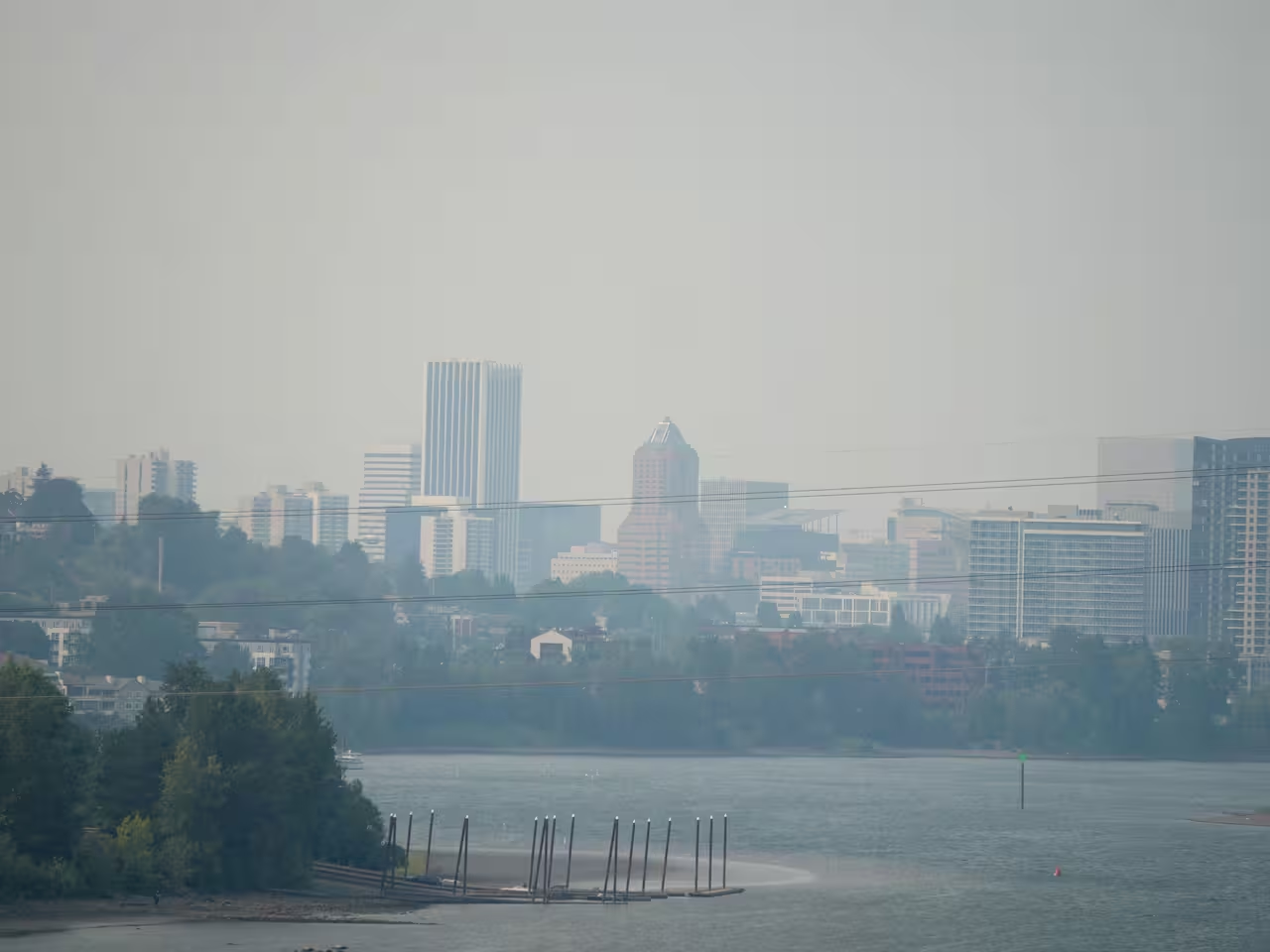
It’s a drag. My kids both have camps this week that have either been canceled or compromised. Exercising outside is a bad idea. I’m monitoring our indoor AQI with a couple sensors and redistributing air filters around the house.
It’s all relative
That said, this is nothing compared to our bout with smoke in 2020. Our AQI, currently at a casual 160 per the screenshot above, shot past 500. That’s literally off most of the scales. A Department of Environmental Quality rep explained:
It doesn’t mean the monitors can’t display higher than that, it just means the health categories haven’t been set up to go beyond that.1
Cool.
The AQI hung out at roughly those levels for an entire week. Not to mention, this was September of 2026 when the pandemic was in full swing. I was struggling as a parent. It was deep low point.
So hey, this ain’t so bad. 😉
Heat waves and smoke
Normally, air gets cooler as you go up into the atmosphere, so warm air from the surface climbs up and away from the surface. This air movement is known as convection,2 and it carries pollutants like wildfire smoke up into the atmosphere where they disperse.
Heat waves in the Pacific Northwest are driven by high-pressure systems up in the atmosphere. These can be called heat domes (though I’m not yet sure if our current heat wave is technically a heat dome or not). The high pressure forces air to sink toward the surface. The sinking air compresses and warms, preventing cloud formation and air movement. The warming effect also causes a layer of hotter air to form over cooler air below — the reverse of the normal situation described above. This is called an inversion layer.
In this scenario, instead of smoke rising up and dispersing, it’s held down at the surface by the high pressure and sinking air. Meanwhile, the inversion layer acts like a lid over the top, suppressing air movement and causing it to stagnate.2 And it’s not just the smoke that stagnates, but also dust, car exhaust, industrial pollution, etc. This can last for days or even weeks.
Better yet, the intense sunlight speeds up chemical reactions of nitrogen oxides and volatile organic compounds in the air, creating ground-level ozone and smog.3 2
I think I get it now. In technical terms, our air has turned to dogshit. But it should get better on Friday!
-
Oregon’s air is so hazardous it’s breaking records. See also from that period, Here’s How Dangerous Portland’s Smoky Skies Are to Your Lungs. ↩︎
-
How Weather Affects Air Quality | Center for Science Education: ↩︎ ↩︎ ↩︎
-
Chemistry for Changing Times sec. 13.5: Photochemical Smog — Making Haze While the Sun Shines. ↩︎